It’s in the DNA

Most of us know little about our great-grandparents, eight distinct people who, on average, contribute 12.5% of our DNA. That’s a lot of genes that make us who we are. Maybe it’s a crooked smile, a cowlick, a sense of humor or a strength you didn’t know you had. It came from somewhere.

Tom & Mary Clifford, guessing 1930s.

And so we begin Year Three of a global pandemic, and I go searching online for resiliency. I find Mary Kennedy Clifford, my mother’s paternal grandmother. Born in St. Louis in 1877 to Irish immigrants John Kennedy and Catherine McKenna, at 22 she married Tom Clifford, a young man from the neighborhood who thought he might give it a go as a pro baseball player. That’s another story. 

In this one,  love prevails over  baseball, and they marry in 1899. Within a year, they have their first child — a boy also named Tom. Two years after that comes John, then Ed, Bill, Rich and Hugh. Six boys in 12 years, all living under one roof on 11th Street, part of an acre now occupied by an exit ramp of Interstate 70. Her mother, now widowed, lived with the family, too. Can you imagine running that house? Cook, clean, mend, eat, pray, love — day after day, with no modern amenities. A life centered around family and St. Michael’s Catholic Church.

And then came a day that would change Mary forever. It was always a vague family story, but this confirms it: Newspapers from Sept. 9, 1912, detailing the drowning of Tom Clifford, age 12, who told his parents he was going to play baseball one Sunday afternoon. But the other team never showed up, so the group decided to go swimming in the Mississippi River. For Tom, it was his first, and last, time.

The wake was at the family home. “Please omit flowers,” the obituary read. At the time, Mary was five months pregnant with her seventh child — a girl, Margaret, who would be born in January and die less than seven months later. “Cholera infantium,” the death certificate read. A year after that, Mary’s mom, Catherine, died at 71. “Arterio sclerosis.” 

How do you survive a three-year stretch like that? I like to think faith had something to do with it. And family. And rising every day to take care of business. Cook. Clean. Mend. Eat. Pray. Love. Mary would have her youngest child the next year, 1915 — a boy named Joe. She’d live through World War I, the Spanish Flu and half of the Great Depression until dying at home on Oct. 24, 1936. “Chronic endocarditis,” the death certificate read. A broken heart.

Her six surviving sons would live for decades, see many wonders of the 20th century and spawn 15 grandchildren and close to 50 great-grandchildren. I’m one of them. So are some of you reading this newspaper. 

The current stretch we’re in? We can make it through. It’s in our DNA.

Originally published in the Webster-Kirkwood Times Jan. 24, 2022.

Click here to read a newspaper account of the drowning of Tom Clifford:

St. Louis Star Times Sept. 9, 1912 Clifford Drowning 09 Sep 1912, Mon The St. Louis Star and Times (St. Louis, Missouri) Newspapers.com

75 years of ‘A Wonderful Life’

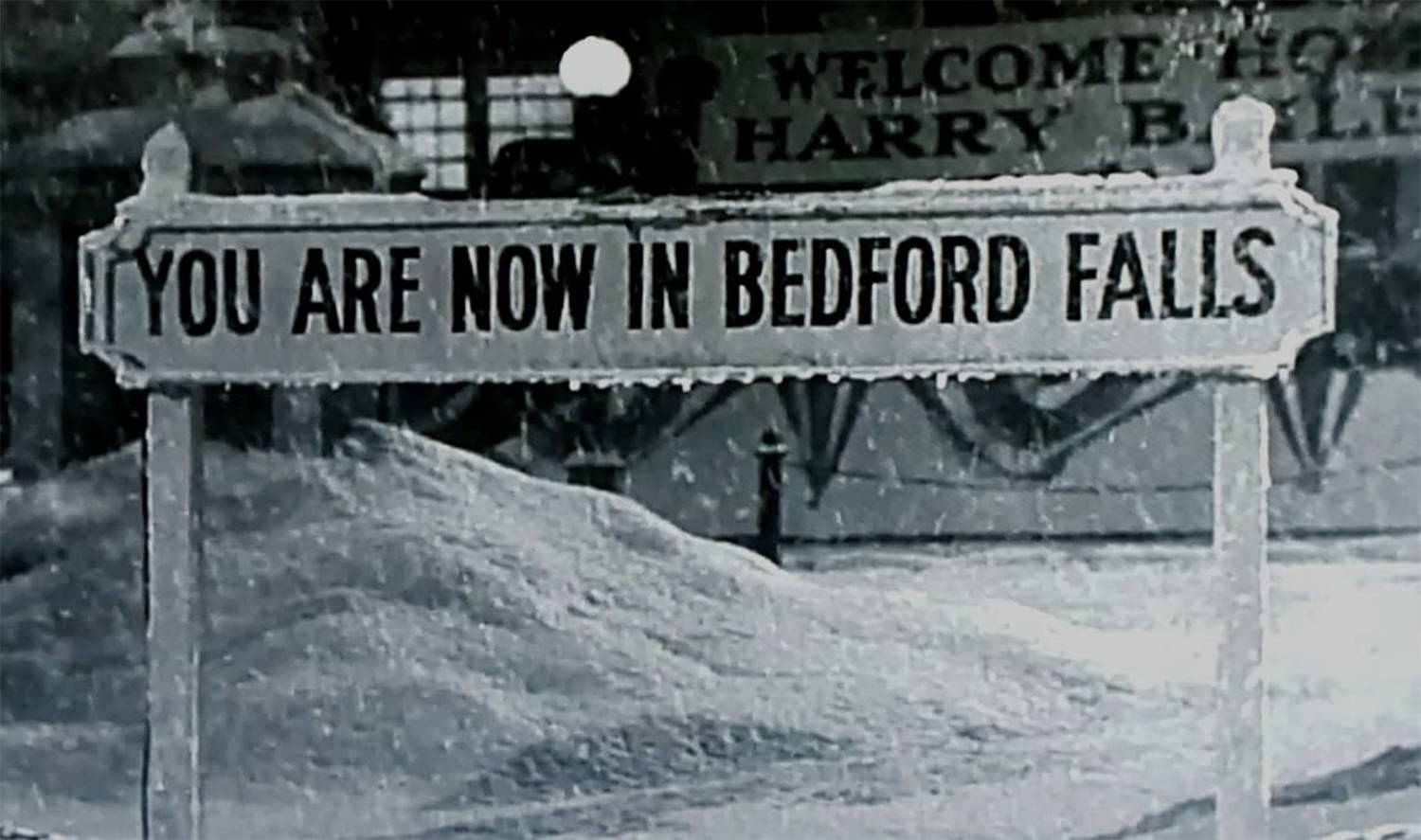
“It’s A Wonderful Life,” released 75 years ago Saturday, Dec. 18, delivers so many great scenes. But to me, one stands out.

It’s about halfway through, when George Bailey, he of the “cheap, penny-ante building and loan,” is offered a job by his nemesis, Mr. Potter, the richest man in Bedford Falls. Potter is tired of losing, so he offers George financial security, a nicer home and a chance to travel the world. Presented with all he’s ever wanted, George Bailey shakes Potter’s hand and, for a split-second, considers the offer. Until …

“Now wait a minute, here,” says Jimmy Stewart as George, delivering the line in perfect gee-whiz staccato. “The answer is no. NO, doggone it! You sit around here and you spin your little webs and you think the whole world revolves around you and your money. Well, it doesn’t, Mr. Potter. In the whole vast configuration of things, I’d say you were nothing but a scurvy little spider!”

“Scurvy little spider” indeed, but not the most quoted line from the film that gave us “Zuzu’s petals,” “George Bailey lassos the moon” and “No man is a failure who has friends.”

You know the story from there: A failing business, a suicide attempt, an angel named Clarence, and Bailey learns that all the friends he’s helped along the way make him the richest man in town. The reason the scene in Potter’s office resonates for me is that given the choice between himself and his community, George Bailey — without the help of a heavenly being — puts his community first.

I fall for it every time.

Not everyone loves “It’s a Wonderful Life,” and neither did the critics, who in 1946 chided its Pollyanna overtones. It’s easy to be cynical about the film, but this movie is as important today as it was for a country still reeling from World War II. I don’t think I’m alone in wondering if the Mr. Potters of the world in 2021 seem to be more prevalent than the George Baileys. I don’t think I’m the only one who wonders if our little corner has become more like Pottersville and less like Bedford Falls.

Remember how the movie ends? The entire town shows up for George when he needs them. Yet we never learn if Mr. Potter suffers any consequences for his behavior, which includes the theft of $8,000 from The Bailey Brothers Building & Loan. Potter never gets his comeuppance — maybe he just crawls back into the dark corner from whence he came, out of sight but always lurking. That’s what scurvy little spiders do.

In a 1987 story in Guideposts magazine, Stewart had this to say of the film’s cultural legacy: “It seems to me there is nothing phenomenal about the movie itself. It’s simply about an ordinary man who discovers that living each ordinary day honorably, with faith in God and a selfless concern for others, can make for a truly wonderful life.”

Originally published in the Webster-Kirkwood Times Dec. 17, 2021

The National Association of Newspaper Columnists

You write a column for a community newspaper delivered on Christmas Eve — and the week of Thanksgiving — and think, well that’s not bad but no one’s going to be reading much of their Webster-Kirkwood Times on busy holiday weeks. But you write them anyway because that’s what you do, just trying to find some nuggets of joy in a difficult year.

And then this happened: This week, I got notification from the National Association of Newspaper Columnists that two columns I wrote for the Times won second place in the category of “General Interest-Print.” A bit bittersweet, because of the subject matter. But I’m glad to be participating in local journalism, and that still matters. Here’s the announcement, along with a link to all the winners and their work.

And here are the winning columns:

Four Generations, One Christmas Eve

Mom wanted us out of the house. It was Christmas Eve 1973, with four kids under 13 underfoot, along with food to prepare and gifts to wrap. She had that look in her eye, the one that said, “Cross me and die.”

So dad packed us in the car and drove downtown to pick up his mom, our grandma, and then another hour to a nursing home in Jerseyville, Illinois. It was not how my 10-year-old self expected Christmas to start.

I could count on one hand the number of times we had visited our 91-year-old great-grandmother, Cora Cummings. We just didn’t get up there that much. All I knew was that on Christmas Eve, we were walking into a small-town nursing home, a place that smelled of ammonia and despair.  

When we entered the room, my dad was the first to greet her. My grandma sat on the bed and held her hand. Us kids sat on chairs and the window ledge, fidgeting while the grown-ups talked. 

The visit lasted less than an hour. As we got up to leave, I remember approaching the bed with trepidation to kiss her goodbye. I was expecting the cold, leathery hands; I wasn’t ready for kind eyes filled with warmth and tears. They were more than I deserved.

By the time we got home, Mom was in full Christmas mode. The holiday commenced, as usual, although I can’t remember what toys were under the tree the next morning. It would take years to realize the gift of Christmas 1973 had already been bestowed, and it was one that would resonate a lifetime: four generations in one room.

Why this story on Christmas Eve 2020? Because there’s never been a year like this, a year that taught us presence is like oxygen and connection is restorative. It took a global pandemic for that to finally sink in.

And loss. That day would be the last time any of us would see Cora Cummings. She died three days later. Infirmities, her obituary said. My dad would recall his grandmother as vibrant and active until she broke her hip that summer, the incident that sent her to the home for the last months of her life. 

Cora’s oldest daughter, my grandma, would die three years later. Heart disease, her obituary said. Knowing what I know now, a big piece of her heart was broken that Christmas Eve.

Cora’s grandson, my dad, would live another 47 years, until this one. Pancreatic cancer, his obituary said; not the virus that’s made this such a horrible, awful, no-good year. A footnote to a historic time, and now three of four generations gone. 

Meanwhile, us fidgety kids have a couple of generations of our own — a thread from that nursing home room that spans three centuries and includes not only two pandemics, two wars and economic hardship, but prosperity, laughter and love, too.

Life goes gloriously on.

The Sound of the Bell

The Frisco Bell would have started ringing on Tuesday at the afternoon pep rally at Kirkwood High — its high, happy clang resonating through the halls.

The clang would have continued into Wednesday at the pep rallies and chili suppers. It would have been heard Thursday morning at breakfasts, then later that day from the back of a pickup truck as it made its way through the streets of Kirkwood and Webster Groves. And for the winner of the Turkey Day Game, the Frisco Bell would have clanged for hours on end into the weekend, its joyous sound heard in your streets, its reverberations felt in your soul.

There’s a reason a train bell clangs, instead of tolls or knells or chimes. The Frisco Bell was cast for a purpose — to serve on a steam locomotive on a train line that originated in St. Louis through Webster and Kirkwood and on to points southwest; to herald and announce, beckon and call and signal that here it comes and there it goes, again and again.

“It is a very distinct sound,” said Kirkwood High School Athletic Director Corey Nesslage, who holds titles as both an administrator and football dad. “To see the boys take ownership after the game and ring it, it gives me chills. We ring the heck out of it.”

Once you’ve heard that clang in your ears, its reverberations reach to your soul. I don’t think it’s overstating how much that sound means to these two communities, nor is there any way to sugarcoat its absence this year. 

Turkey Day isn’t just a football game and the Frisco Bell isn’t just an old train part. To participate in this holiday tradition at any level — from the players to the pep bands, from the cheerleaders to the fans, from the business owners to the alumni who can’t stay away — is to be a part of something bigger than yourself.

I may not have grown up in Webster or Kirkwood, or in the tradition of Turkey Day, but I know about football and what it means to a community. I have heard the bell clang. And while it may be silent this year, that doesn’t mean it’s not resonating. It is. It most certainly is. 

Because somewhere off Essex Avenue in Kirkwood or just off Elm Avenue in Webster, there’s a kid whose stubby fingers are desperately gripping a football and begging someone to play catch in the backyard. Somewhere in Glendale there’s a kid who can’t stop doing cartwheels. In Rock Hill, a kid is asking for a drum set for Christmas. In Des Peres, there’s a kid who draws football plays in a notebook. 

And that happens again and again, year after year, both inside and outside the limits of two great communities. Because joy has no boundaries and community is who you happen to be near on any given day. 

And the Frisco Bell clangs on, to herald and announce, beckon and call. I bet you can hear it, too.

The corner of a corner lot

“This is not our world with trees in it. It’s a world of trees, where humans have just arrived.”

I read that recently from the writer Richard Powers, who won the 2019 Pulitzer Prize for his novel, “The Overstory.” Perspective-changing? Definitely. I can honestly say I haven’t looked at trees the same way since.

And so a story about a tree for the month of April, the month of Arbor Day celebrations and poetry. I don’t think it’s an accident these two intersect.

This tree is now a 22-foot white oak that grows near the corner of a corner lot in Crestwood. A tree that’s been growing 14 years this spring, since the time it arrived in a 10-year-old’s backpack, a sapling wrapped in a paper towel. I remember the day he brought it home, unpacking his lunch, a pencil box and a bunch of crumpled papers before proudly holding it up and saying, “When is Dad coming home?”

It was a 2007 Arbor Day giveaway, compliments of the state of Missouri. Do they still do that for 4th graders? I certainly hope so.

They planted that twig a few days later, a stake marking its place and mulch protecting is base. They watered it together that first summer, and somehow it survived into the first winter. After that, a second spring, followed by seasons and seasons of windstorms, thunderstorms, snow storms and ice storms. It took a few years to sprout noticeable branches but until it did, it didn’t seem to mind being tagged as second base or as an end zone marker for little boys’ games. …

Read the rest in the April 16, 2021, issue of the Webster-Kirkwood Times.