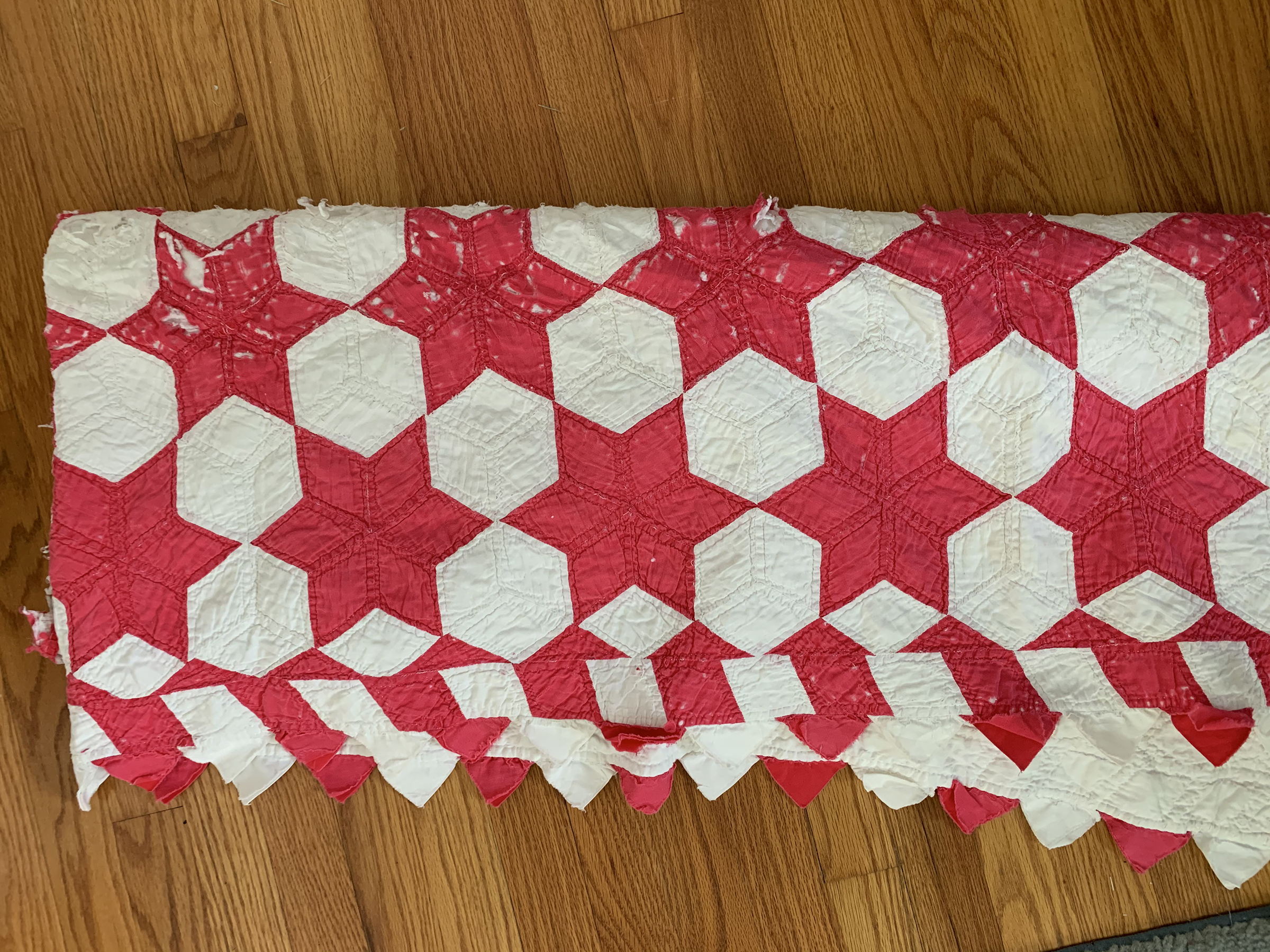
It’s in the DNA

Most of us know little about our great-grandparents, eight distinct people who, on average, contribute 12.5% of our DNA. That’s a lot of genes that make us who we are. Maybe it’s a crooked smile, a cowlick, a sense of humor or a strength you didn’t know you had. It came from somewhere.

Tom & Mary Clifford, guessing 1930s.

And so we begin Year Three of a global pandemic, and I go searching online for resiliency. I find Mary Kennedy Clifford, my mother’s paternal grandmother. Born in St. Louis in 1877 to Irish immigrants John Kennedy and Catherine McKenna, at 22 she married Tom Clifford, a young man from the neighborhood who thought he might give it a go as a pro baseball player. That’s another story. 

In this one,  love prevails over  baseball, and they marry in 1899. Within a year, they have their first child — a boy also named Tom. Two years after that comes John, then Ed, Bill, Rich and Hugh. Six boys in 12 years, all living under one roof on 11th Street, part of an acre now occupied by an exit ramp of Interstate 70. Her mother, now widowed, lived with the family, too. Can you imagine running that house? Cook, clean, mend, eat, pray, love — day after day, with no modern amenities. A life centered around family and St. Michael’s Catholic Church.

And then came a day that would change Mary forever. It was always a vague family story, but this confirms it: Newspapers from Sept. 9, 1912, detailing the drowning of Tom Clifford, age 12, who told his parents he was going to play baseball one Sunday afternoon. But the other team never showed up, so the group decided to go swimming in the Mississippi River. For Tom, it was his first, and last, time.

The wake was at the family home. “Please omit flowers,” the obituary read. At the time, Mary was five months pregnant with her seventh child — a girl, Margaret, who would be born in January and die less than seven months later. “Cholera infantium,” the death certificate read. A year after that, Mary’s mom, Catherine, died at 71. “Arterio sclerosis.” 

How do you survive a three-year stretch like that? I like to think faith had something to do with it. And family. And rising every day to take care of business. Cook. Clean. Mend. Eat. Pray. Love. Mary would have her youngest child the next year, 1915 — a boy named Joe. She’d live through World War I, the Spanish Flu and half of the Great Depression until dying at home on Oct. 24, 1936. “Chronic endocarditis,” the death certificate read. A broken heart.

Her six surviving sons would live for decades, see many wonders of the 20th century and spawn 15 grandchildren and close to 50 great-grandchildren. I’m one of them. So are some of you reading this newspaper. 

The current stretch we’re in? We can make it through. It’s in our DNA.

Originally published in the Webster-Kirkwood Times Jan. 24, 2022.

Click here to read a newspaper account of the drowning of Tom Clifford:

St. Louis Star Times Sept. 9, 1912 Clifford Drowning 09 Sep 1912, Mon The St. Louis Star and Times (St. Louis, Missouri) Newspapers.com

75 years of ‘A Wonderful Life’

“It’s A Wonderful Life,” released 75 years ago Saturday, Dec. 18, delivers so many great scenes. But to me, one stands out.

It’s about halfway through, when George Bailey, he of the “cheap, penny-ante building and loan,” is offered a job by his nemesis, Mr. Potter, the richest man in Bedford Falls. Potter is tired of losing, so he offers George financial security, a nicer home and a chance to travel the world. Presented with all he’s ever wanted, George Bailey shakes Potter’s hand and, for a split-second, considers the offer. Until …

“Now wait a minute, here,” says Jimmy Stewart as George, delivering the line in perfect gee-whiz staccato. “The answer is no. NO, doggone it! You sit around here and you spin your little webs and you think the whole world revolves around you and your money. Well, it doesn’t, Mr. Potter. In the whole vast configuration of things, I’d say you were nothing but a scurvy little spider!”

“Scurvy little spider” indeed, but not the most quoted line from the film that gave us “Zuzu’s petals,” “George Bailey lassos the moon” and “No man is a failure who has friends.”

You know the story from there: A failing business, a suicide attempt, an angel named Clarence, and Bailey learns that all the friends he’s helped along the way make him the richest man in town. The reason the scene in Potter’s office resonates for me is that given the choice between himself and his community, George Bailey — without the help of a heavenly being — puts his community first.

I fall for it every time.

Not everyone loves “It’s a Wonderful Life,” and neither did the critics, who in 1946 chided its Pollyanna overtones. It’s easy to be cynical about the film, but this movie is as important today as it was for a country still reeling from World War II. I don’t think I’m alone in wondering if the Mr. Potters of the world in 2021 seem to be more prevalent than the George Baileys. I don’t think I’m the only one who wonders if our little corner has become more like Pottersville and less like Bedford Falls.

Remember how the movie ends? The entire town shows up for George when he needs them. Yet we never learn if Mr. Potter suffers any consequences for his behavior, which includes the theft of $8,000 from The Bailey Brothers Building & Loan. Potter never gets his comeuppance — maybe he just crawls back into the dark corner from whence he came, out of sight but always lurking. That’s what scurvy little spiders do.

In a 1987 story in Guideposts magazine, Stewart had this to say of the film’s cultural legacy: “It seems to me there is nothing phenomenal about the movie itself. It’s simply about an ordinary man who discovers that living each ordinary day honorably, with faith in God and a selfless concern for others, can make for a truly wonderful life.”

Originally published in the Webster-Kirkwood Times Dec. 17, 2021

Over 50 and outside: A quarter of the way through

A few months ago, my husband forwarded me an email and said something to the effect of “I found this hiking group for women over 50. You should apply.” I’d always liked the outdoors. I mean, who doesn’t envision themselves the next Cheryl Strayed hiking 2,650 miles of the Pacific Crest Trail? OK, well maybe I never really envisioned that but I do like a good vista when I see one.

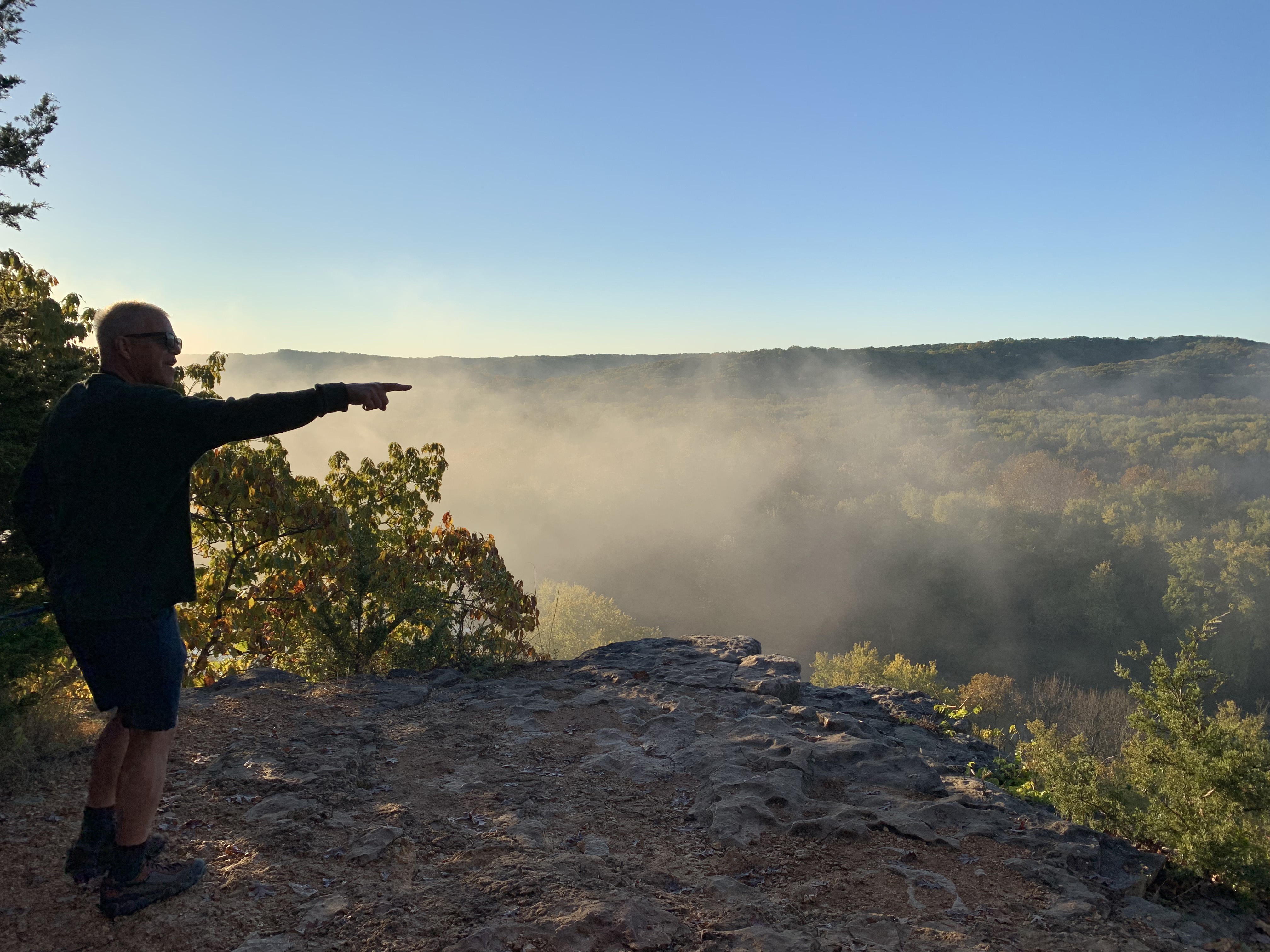
Overlooking the Meramec River in Castlewood State Park in southwest St. Louis County, Mo.

The next thing I know, I’m one of 150 women from around the country chosen from more than 2,800 applications for the Over 50 Outside Challenge and committing to hiking once a week for a year.

The next thing I know, I’m in a Facebook group with women who are introducing themselves with pictures from Mt. Rainier and the Appalachian Trail, with the same sinking feeling I had that time in college when I wandered into a 400-level calculus class by mistake. You can read more about how I got into it here.

The lake at Bee Tree Park.

Ten weeks in and I’m 25 percent through the challenge, and I can honestly say it’s been a blessing. I’m celebrating being a quarter of the way through the delightful journey started on the first weekend in September to hike 52 times in a year. I still consider myself a novice, hiking anywhere between two and five miles and breaking in the boots, learning how to navigate and taking the trails literally one step at a time. I’m amazed at how many hiking trails are within — and within striking distance of St. Louis. Some weekends have been easier to get motivated for than others, for sure, but I’ve not regretted one of them — even under a few extraordinary personal challenges thrown our way these past two months. In five weeks’ time, we lost our dog and my husband lost his father. In many ways, I don’t know what I would have done without this program.

Below is a slideshow of 13 hikes, along with a few things I’ve learned:

  • Not knowing where you’re going or how long it’s going to take to get there can be an opportunity for growth — as long as you have a good compass and map. Or GPS.
  • On the flip side, even if you’ve passed this way before, it’s absolutely true that no trail is the same trail every time.
  • Hiking solo is awesome but it’s better with a buddy — or the love of your life. 
  • A deep breath in a forest is more restorative than any deep breath anywhere else, because there really is healing in nature; there is medicine in the trees. It’s tangible. You can feel it.
  • A vista can change you, even if the pictures don’t do it justice.
  • By all means take the picture,, then put the damn phone away and take it all in.
  • The fall of 2021 in the Midwest will go down as one of the most brilliant, beautiful autumns, or maybe it’s because I’ve just begun to keep score.

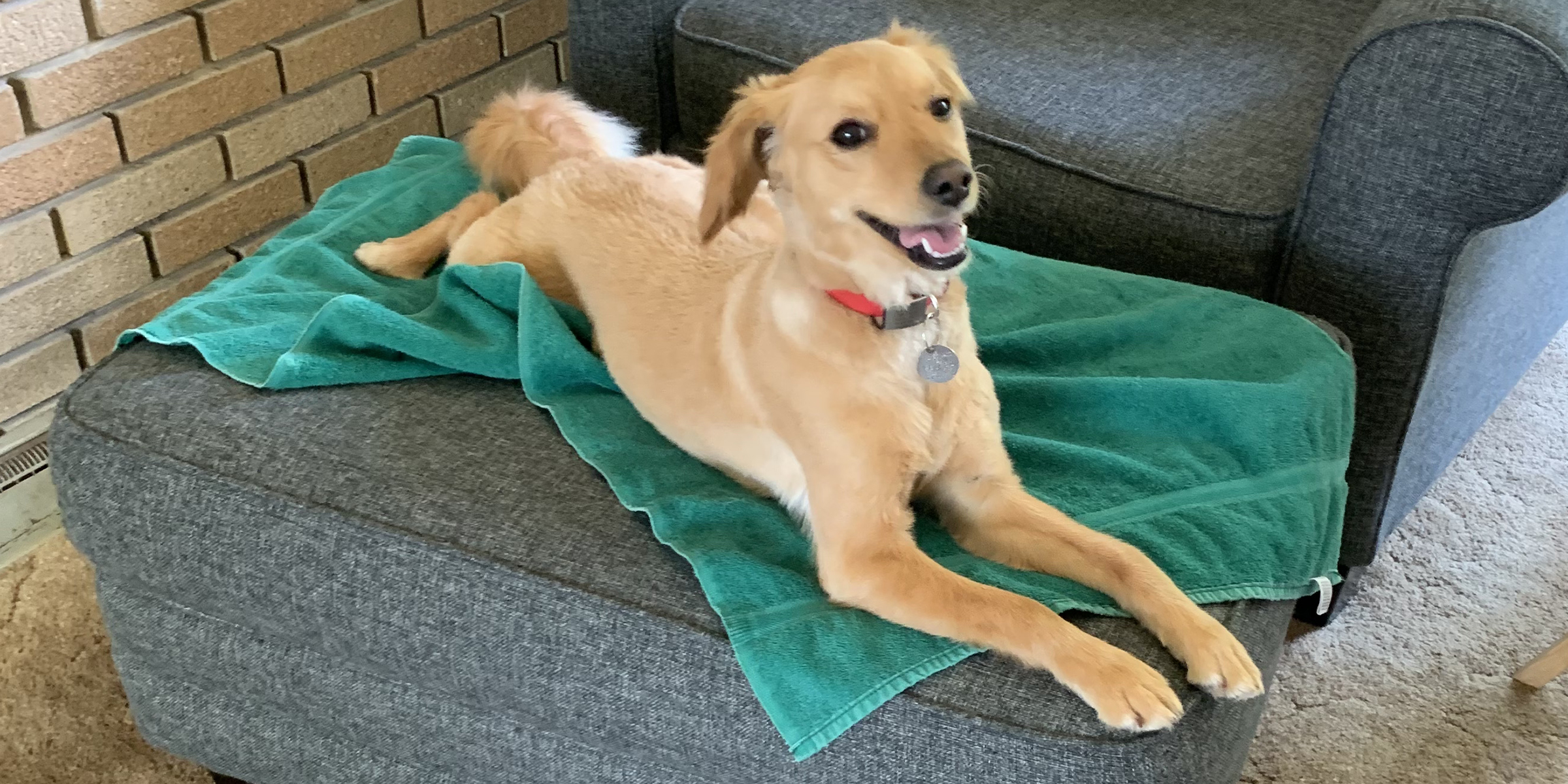
A very, very good dog

At some point today we’ll pick up the chew toys: the rope monkey and the squeaky skunk and the flying squirrel that’s now half-rope and half-matted fur.

It is after all, the weekend, time to clean and vacuum dog hair, and make the house a bit more presentable after a week in which Molly has reigned supreme over all. Which is what every week for the past two years has been like since the October day in 2019 when we drove up to West Point, Ia., to pick up a puppy from Rafter W Farms. 

We had no idea what we were getting into.

What we were getting was a 20-pound miniature goldendoodle, a specialty breed of golden brown hair that never got curly — a “toy” golden, the perfect dog. A long snout that made a smile more obvious; a long tail with so much hair on it that it looks like a plume when it’s curled up and wagging, which is often and awesome at the same time.

Two years ago this week, she completely took over our lives — beginning in the early days where we were like, “What were we thinking, getting a puppy at our age?” The family text string was working overtime with frequent updates and pictures: updates on her thrice-daily walks; her affection for eating acorns; and the frequency and consistency of, well, poop. Matt in Chicago wondered why we waited so long. Jack took advantage of his last three months living in the house to bond with her. We willingly shelled out money for daily pet care, premium snacks and mobile grooming. We rearranged social outings and work schedules to make sure she didn’t spend too much time alone or in her kennel.

She was a Godsend during the pandemic, from the early unsettling days of 2020 to the long months that dragged on, making work at home bearable and fun. Molly was a constant presence who needed us as much as we needed her. 

If you notice a subtle change in verb tense, well there’s a reason: On Thursday, we had to say goodbye to our beloved Molly much too soon, and much too unexpectedly.

Last Thursday morning, she either got bit/stung by an insect or ingested some kind of toxin that seeped into her bloodstream, resulting in a slow — at first — reaction that ended up in anaphylactic shock. So what started out as a nervous trip to our Arch Animal Hospital vet for what we thought were stomach issues ended up a few hours later with a transfer to the emergency pet hospital for what the vet called a “systemic and violent reaction” to the toxin.

It all changed within a matter of a few hours. Her organs began to fail and she did not respond to treatment. By 8:30 p.m., they told us it was doubtful she would make it through the night. So we made the awful, horrible decision to euthanize, and Tom, Jack and I were able to be with her when she was put to sleep in a most gentle and pain-free way. But not before raising her head and seeing her glorious tail wag one last time — at the sight and smell of Jack and Tom rushing into the vet’s office just before we transported her to VSS.  

Turns out, that was her goodbye to all of us.

We are shocked and saddened. She was just entering her prime — she turned 2 Aug. 11 — and we would have celebrated our “gotcha” day this Tuesday, Oct. 5. She was our Molly Girl, our Doggie Dog. And she taught us many things, such as:

  • Sometimes, a good walk around the block, no matter the weather or the temperature, is just enough to settle you down.
  • The surest way to make a neighbor a friend is to walk past their house every night.
  • A dog begging for a belly rub is a fail-proof way to curtail screen time.
  • A 20-pound dog can play soccer, push a regulation ball the length of a backyard or balance it on her nose — and bark in delight at the same time.
  • Naps are good.
  • Snuggles are contagious.
  • Love is unconditional.

We will miss her forever. From the bottom of our hearts, we want to thank Dr. Angela Garcia at Arch Animal Hospital, the best vet ever, and Dr. Jennifer Eisele, the ER vet at Veterinary Special Services, as well as the staffs of both places. Thanks to Cindy Berndt of Critter Sitters, our beloved pet sitter who was responsible for the soccer tricks and who jumped right back in despite an 18-month hiatus in pet care. Thanks to our friends Cindy and Miles Wellman and Rafter W Farms for helping us find the most unique and perfect canine the world has ever seen. That’s not an exaggeration. 

She was a very, very good girl.

Our Field of Dreams

You know we just don’t recognize the most significant moments of our lives while they’re happening. Back then I thought, well, there’ll be other days. I didn’t realize that that was the only day. – Doc “Moonlight” Graham, to Ray Kinsella in the movie “Field of Dreams”

In the summer of 2003, just before embarking on a family vacation to Minnesota, I pitched an idea to my editors at the Sporting News: A 15th anniversary story about a baseball field in Iowa.

By that point, “Field of Dreams” was already part of baseball lore and 50,000-60,000 people a year were making the pilgrimage to the tiny farm outside of Dyersville, Ia., where the movie was filmed in the summer of 1988.

And this was Sporting News calling, so then-owners Don and Becky Lansing were more than gracious to a sportswriter who asked if it would be OK to bring her family along for the interview. It was more than OK. Though they no longer lived in the farmhouse that was used to film the interiors, they met us there, gave us a tour, and offered the porch for the interview. And that’s where I sat talking to the Lansings while Tom, Matt and Jack played catch on the field, frolicked in the corn and acted out scenes from the movie.

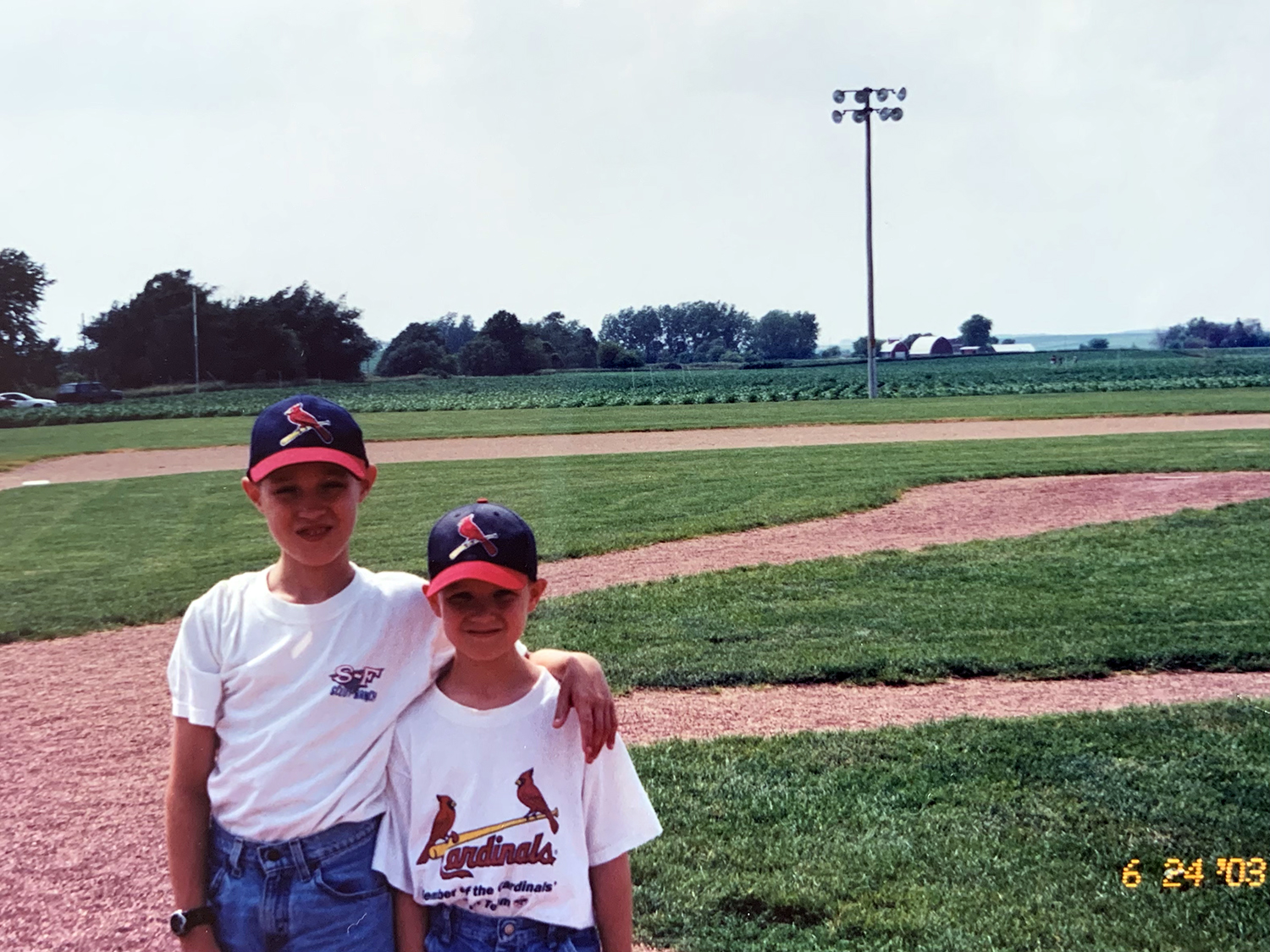
Some stories in a career transcend time, and this is one of them. It’s a moment I’ll never forget, watching my husband and our boys, who were 9 and 7 at the time, play on that field – from the same porch where Annie sat watching Ray and his dad have a catch. Sometimes, you do recognize the most significant moments of your life as they’re happening.

Tom and Jack on the field.

Below is the story as it appeared in the July 9, 2003, issue of the Sporting News as well some photos. The Lansings sold the farm in 2011 to a group from Chicago, and the Aug. 12 game between the Yankees and the White Sox has renewed interest in the site. But the movie endures, and I swear every damn time I watch it I get a lump in my throat at the end.

“Field of Dreams” has become part of our family lore, and it’s safe to say if there’s one constant for a family with grown children, it’s baseball. Two of the best moments of this summer of 2021 have happened around baseball: visiting Jack, a St. Louis realtor, in his downtown St. Louis Ballpark Village office; and heading to Chicago to see Matt, an attorney, who surprised his mom with tickets to a baseball game. Which team? The White Sox. Of course.

The National Association of Newspaper Columnists

You write a column for a community newspaper delivered on Christmas Eve — and the week of Thanksgiving — and think, well that’s not bad but no one’s going to be reading much of their Webster-Kirkwood Times on busy holiday weeks. But you write them anyway because that’s what you do, just trying to find some nuggets of joy in a difficult year.

And then this happened: This week, I got notification from the National Association of Newspaper Columnists that two columns I wrote for the Times won second place in the category of “General Interest-Print.” A bit bittersweet, because of the subject matter. But I’m glad to be participating in local journalism, and that still matters. Here’s the announcement, along with a link to all the winners and their work.

And here are the winning columns:

Four Generations, One Christmas Eve

Mom wanted us out of the house. It was Christmas Eve 1973, with four kids under 13 underfoot, along with food to prepare and gifts to wrap. She had that look in her eye, the one that said, “Cross me and die.”

So dad packed us in the car and drove downtown to pick up his mom, our grandma, and then another hour to a nursing home in Jerseyville, Illinois. It was not how my 10-year-old self expected Christmas to start.

I could count on one hand the number of times we had visited our 91-year-old great-grandmother, Cora Cummings. We just didn’t get up there that much. All I knew was that on Christmas Eve, we were walking into a small-town nursing home, a place that smelled of ammonia and despair.  

When we entered the room, my dad was the first to greet her. My grandma sat on the bed and held her hand. Us kids sat on chairs and the window ledge, fidgeting while the grown-ups talked. 

The visit lasted less than an hour. As we got up to leave, I remember approaching the bed with trepidation to kiss her goodbye. I was expecting the cold, leathery hands; I wasn’t ready for kind eyes filled with warmth and tears. They were more than I deserved.

By the time we got home, Mom was in full Christmas mode. The holiday commenced, as usual, although I can’t remember what toys were under the tree the next morning. It would take years to realize the gift of Christmas 1973 had already been bestowed, and it was one that would resonate a lifetime: four generations in one room.

Why this story on Christmas Eve 2020? Because there’s never been a year like this, a year that taught us presence is like oxygen and connection is restorative. It took a global pandemic for that to finally sink in.

And loss. That day would be the last time any of us would see Cora Cummings. She died three days later. Infirmities, her obituary said. My dad would recall his grandmother as vibrant and active until she broke her hip that summer, the incident that sent her to the home for the last months of her life. 

Cora’s oldest daughter, my grandma, would die three years later. Heart disease, her obituary said. Knowing what I know now, a big piece of her heart was broken that Christmas Eve.

Cora’s grandson, my dad, would live another 47 years, until this one. Pancreatic cancer, his obituary said; not the virus that’s made this such a horrible, awful, no-good year. A footnote to a historic time, and now three of four generations gone. 

Meanwhile, us fidgety kids have a couple of generations of our own — a thread from that nursing home room that spans three centuries and includes not only two pandemics, two wars and economic hardship, but prosperity, laughter and love, too.

Life goes gloriously on.

The Sound of the Bell

The Frisco Bell would have started ringing on Tuesday at the afternoon pep rally at Kirkwood High — its high, happy clang resonating through the halls.

The clang would have continued into Wednesday at the pep rallies and chili suppers. It would have been heard Thursday morning at breakfasts, then later that day from the back of a pickup truck as it made its way through the streets of Kirkwood and Webster Groves. And for the winner of the Turkey Day Game, the Frisco Bell would have clanged for hours on end into the weekend, its joyous sound heard in your streets, its reverberations felt in your soul.

There’s a reason a train bell clangs, instead of tolls or knells or chimes. The Frisco Bell was cast for a purpose — to serve on a steam locomotive on a train line that originated in St. Louis through Webster and Kirkwood and on to points southwest; to herald and announce, beckon and call and signal that here it comes and there it goes, again and again.

“It is a very distinct sound,” said Kirkwood High School Athletic Director Corey Nesslage, who holds titles as both an administrator and football dad. “To see the boys take ownership after the game and ring it, it gives me chills. We ring the heck out of it.”

Once you’ve heard that clang in your ears, its reverberations reach to your soul. I don’t think it’s overstating how much that sound means to these two communities, nor is there any way to sugarcoat its absence this year. 

Turkey Day isn’t just a football game and the Frisco Bell isn’t just an old train part. To participate in this holiday tradition at any level — from the players to the pep bands, from the cheerleaders to the fans, from the business owners to the alumni who can’t stay away — is to be a part of something bigger than yourself.

I may not have grown up in Webster or Kirkwood, or in the tradition of Turkey Day, but I know about football and what it means to a community. I have heard the bell clang. And while it may be silent this year, that doesn’t mean it’s not resonating. It is. It most certainly is. 

Because somewhere off Essex Avenue in Kirkwood or just off Elm Avenue in Webster, there’s a kid whose stubby fingers are desperately gripping a football and begging someone to play catch in the backyard. Somewhere in Glendale there’s a kid who can’t stop doing cartwheels. In Rock Hill, a kid is asking for a drum set for Christmas. In Des Peres, there’s a kid who draws football plays in a notebook. 

And that happens again and again, year after year, both inside and outside the limits of two great communities. Because joy has no boundaries and community is who you happen to be near on any given day. 

And the Frisco Bell clangs on, to herald and announce, beckon and call. I bet you can hear it, too.

Four decades later …

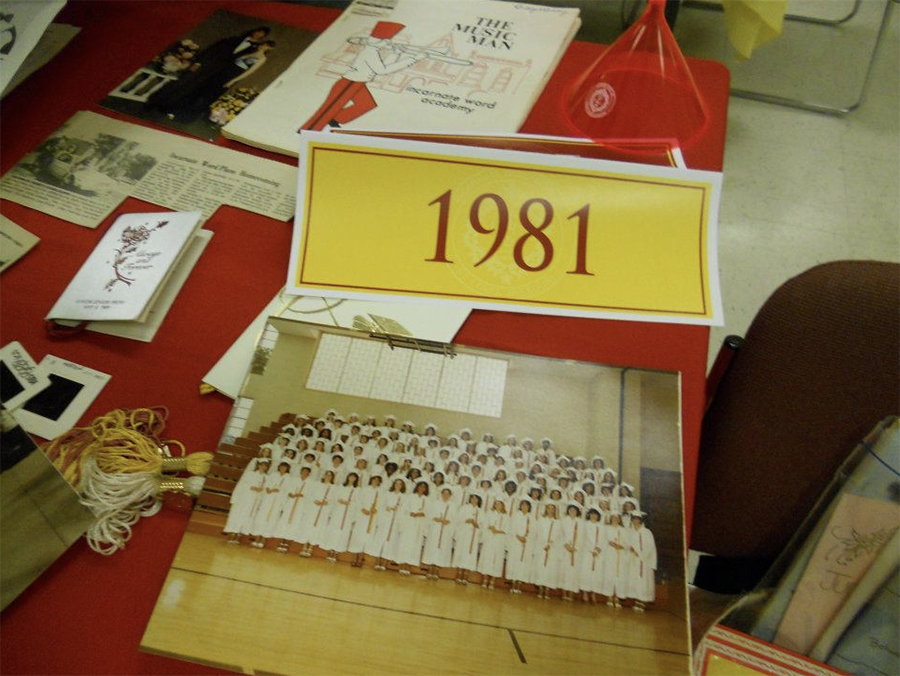
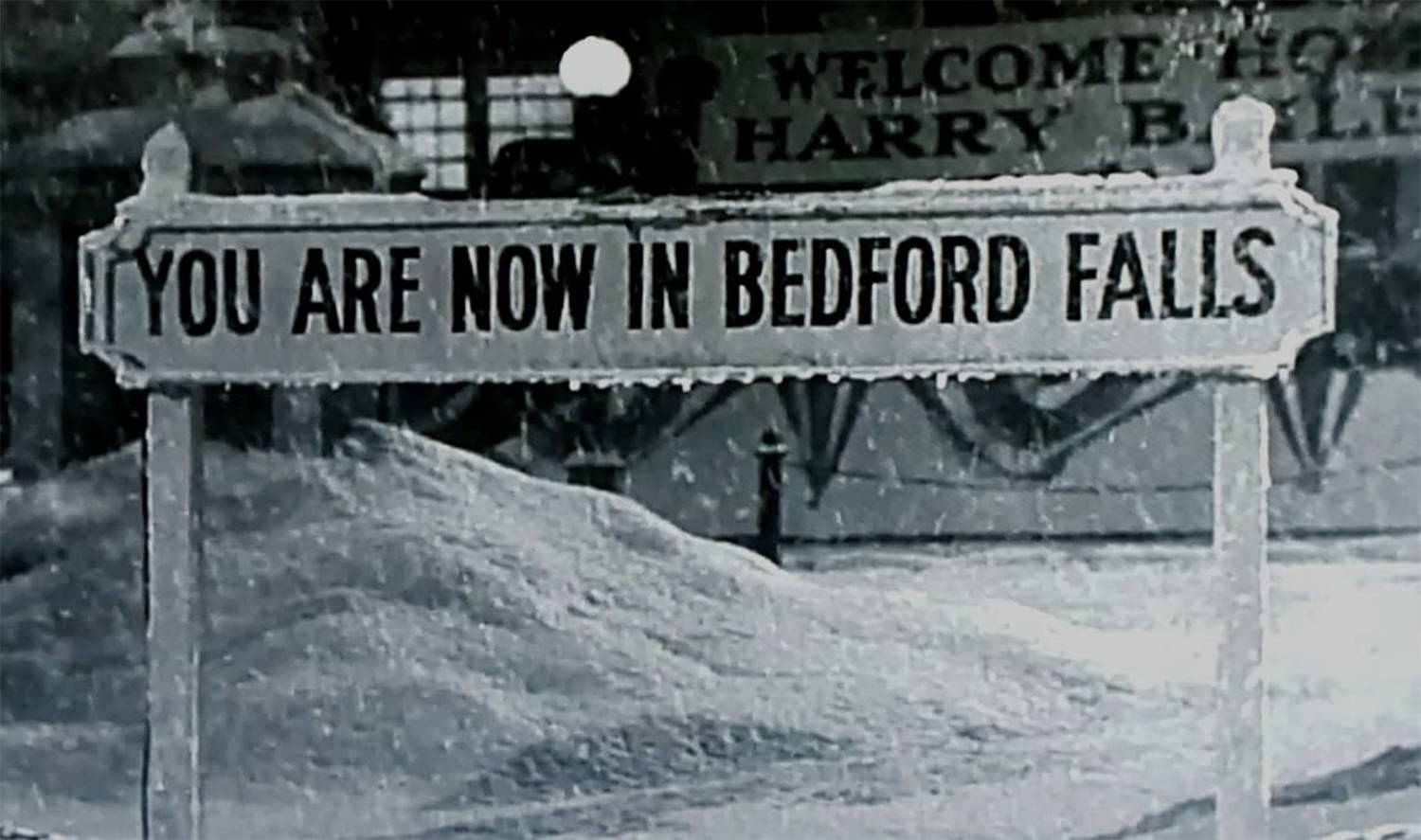
40 years ago this week, this.

40 freakin’ years. What kind of a cruel anniversary is this, when it really only feels like 10, maybe 15, just long enough to become who you are away from your high school and because of it.

40 years is the gray-flecked-haired stepchild of reunions. At 10 years, you’re still a kid just getting started. At 25 years, you think you’re old but what you wouldn’t give now to have the neck of a 43-year-old. Heck, even at 50 they call you golden and give you a parade. But 40? Who wants to celebrate that?

After the past 14 months, we should. 40 years ago tonight the Class of ’81 walked across the stage for the final time as students of Incarnate Word Academy, a lovely little all-girls’ school tucked away in a hamlet of north St. Louis County, run by an order of nuns from Texas whose mission was to educate empowered women. There were 96 or 97 of us, and we really didn’t quite grasp, I don’t think, what the world had in store for us. The Sisters of Charity of the Incarnate Word set the foundation; it was going to be up to us after that. At least they had given us punctuation. Oh Incarnate Word!, exclamation mark intended.

Oh Incarnate Word! is the first line of the school song, an exclamatory phrase that was prevalant throughout the four years that skirted the 1970s and into the 1980s, an era that started with bell bottoms, Jimmy Carter and disco and ended with the Preppy Handbook, Ronald Reagan and new wave music. It really was a weird time to come of age. Oh Incarnate Word! was spiritual and warm and fierce and flawed. But it’s where I learned that sisterhood is real, that you can match a lot with a navy blue jumper and that we were waaaaay ahead of our time with our Chuck Taylor sneakers.

Oh Incarnate Word! Where a Canadian English teacher taught you to read deeper, write longer and leave it all out on the page. Where the drama teacher told you the reason you didn’t make “Oklahoma” was because you couldn’t sing or dance, and instead of letting that break you, you just did something else. Where you heard “Be Not Afraid,” for the very first time at an all-school Mass and you knew immediately it’d be a song that would touch your soul again and again and again.

Oh Incarnate Word! Where a class of young women would go onto becoming doctors, lawyers, physical therapists, journalists, teachers, principals, PhDs, entrepreneurs, scientists, real estate moguls, wives and significant others, moms and step-moms, grandmothers and step-grandmothers, sisters and sisters-in-laws.

At some point this year, I hope we can get together and celebrate this night in 1981. Hit me up if anyone’s interested in planning a reunion for this fall. Until then, cheers to you lovely women who stood with me 40 years ago at the intersection of wonder and uncertainty, and went out into the world anyway, sent out with an exclamation mark. Oh Incarnate Word!

The endless possibilities of poetry

I loved being an English major, even when everyone around me thought I was nuts, even as it drove my parents crazy out of worry for my job prospects. It was the mid-1980s, and who was going to hire someone with a liberal arts degree from a small, unheralded Midwestern college where all the cool kids were studying marketing or computer science?

I would just stare blankly and politely nod at my roommates when they talked about their case studies on some guy named Sam Walton, or fretted over lines of computer code on dot-matrix printer paper. I just wanted to go back to reading the good stuff, like the poetry of Robert Frost, Sylvia Plath or Howard Nemerov. I thought I was the lucky one. So what if it wasn’t going to take me a bit longer to find a job? It did. But 36 years later, it all worked out.

Now, I get to write stories for Washington University like this one, when the opportunity arises to interview the rock stars of the poetry world. Here’s the story I wrote that appeared for an online edition of Washington Magazine, part of a team effort in Public Affairs to promote poetry for National Poetry Month.

The corner of a corner lot

“This is not our world with trees in it. It’s a world of trees, where humans have just arrived.”

I read that recently from the writer Richard Powers, who won the 2019 Pulitzer Prize for his novel, “The Overstory.” Perspective-changing? Definitely. I can honestly say I haven’t looked at trees the same way since.

And so a story about a tree for the month of April, the month of Arbor Day celebrations and poetry. I don’t think it’s an accident these two intersect.

This tree is now a 22-foot white oak that grows near the corner of a corner lot in Crestwood. A tree that’s been growing 14 years this spring, since the time it arrived in a 10-year-old’s backpack, a sapling wrapped in a paper towel. I remember the day he brought it home, unpacking his lunch, a pencil box and a bunch of crumpled papers before proudly holding it up and saying, “When is Dad coming home?”

It was a 2007 Arbor Day giveaway, compliments of the state of Missouri. Do they still do that for 4th graders? I certainly hope so.

They planted that twig a few days later, a stake marking its place and mulch protecting is base. They watered it together that first summer, and somehow it survived into the first winter. After that, a second spring, followed by seasons and seasons of windstorms, thunderstorms, snow storms and ice storms. It took a few years to sprout noticeable branches but until it did, it didn’t seem to mind being tagged as second base or as an end zone marker for little boys’ games. …

Read the rest in the April 16, 2021, issue of the Webster-Kirkwood Times.

The best way out

A fresh pot of coffee. Stretchy yoga pants. Consistent WiFi. A dog leash hung next to the door. A clean supply of masks. That’s pretty much all I need, here on the 373rd day of the pandemic. 

A year ago this week, I remember being among the last to leave my office, turning off the lights for what was supposed to be three weeks to “flatten the curve.” I couldn’t shake the feeling though, that it was going to be months before I saw some of my colleagues. One year later, and our daily interactions are still through Zoom. I’ve long given up worrying about my background screen.

In the poem “A Servant to Servants,” Robert Frost wrote, “The best way out is always through,” one of those lines that hits you like a lightning bolt as a young college student, but you haven’t lived enough yet to know why. And so the through line of the COVID-19 pandemic now spans 12 months and includes so much heartbreak. 

Lives lost, relationships strained. And the loss of so many things we took for granted, like shaking hands in church — or even going to church. A proper burial for our dead. Baby showers and baseball games. Eating at a restaurant.

“Flatten the curve” seems quaint now, as does the idea we would all band together to defeat a tiny microbe that turned our lives upside down. History is hard to put into perspective while it’s still happening …

Read the rest of the column in the March 19, 2021 issue of the Webster-Kirkwood Times.